
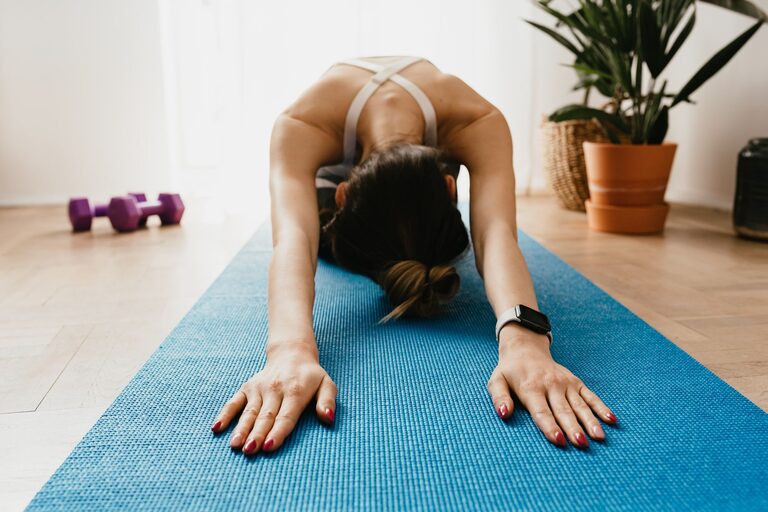
Stretching is a simple yet powerful practice that can improve your flexibility, relieve muscle tension, and enhance your overall sense of well-being. The best part? You don’t need a gym or special equipment to get started. In this guide, we’ll explore how beginners can safely and effectively stretch at home.
Why Stretch at Home?
Stretching helps maintain and improve the range of motion in your joints, keeps muscles healthy, and can reduce the risk of injuries. Doing it at home means you have the convenience to fit it into your schedule anytime you want, making it easier to build a regular habit.
Getting Started: What You Need
– Comfortable Clothing: Wear clothes that allow free movement.
– A Quiet Space: Find a calm spot where you won’t be disturbed.
– A Mat or Soft Surface: Use a yoga or exercise mat for comfort, especially for floor stretches.
– Water Bottle: Stay hydrated before and after stretching.
Basic Stretching Tips for Beginners
- **Warm Up First:** Stretching cold muscles can lead to injuries. Warm up with 5 minutes of light activity like walking in place or gentle arm circles.
- **Breathe Naturally:** Don’t hold your breath while stretching. Inhale deeply and exhale slowly.
- **Go Slow:** Move into each stretch gradually, avoiding bouncing or jerking motions.
- **Hold, Don’t Bounce:** Hold each stretch for 15 to 30 seconds. This allows the muscles to lengthen safely.
- **Stretch Both Sides:** Always stretch both the left and right sides of your body evenly.
- **Listen to Your Body:** You should feel tension but not pain. If a stretch hurts, ease off.
Essential Stretches to Try at Home
1. Neck Stretch
– Sit or stand upright.
– Slowly tilt your head toward your right shoulder until you feel a gentle stretch along the left side of your neck.
– Hold for 20 seconds, then switch to the left side.
2. Shoulder Stretch
– Bring your right arm across your chest.
– Use your left hand to press your right arm closer to your chest.
– Hold for 20 seconds, then switch arms.
3. Chest Opener
– Stand with your feet shoulder-width apart.
– Clasp your hands behind your back and straighten your arms.
– Lift your chest and gently pull your shoulder blades together.
– Hold for 20 to 30 seconds.
4. Cat-Cow Stretch (Spine Mobility)
– Get down on all fours (hands under shoulders, knees under hips).
– Inhale as you arch your back letting your belly drop toward the floor (Cow).
– Exhale as you round your spine toward the ceiling, tucking your chin to your chest (Cat).
– Repeat 8 to 10 times.
5. Seated Forward Bend
– Sit with your legs extended straight in front of you.
– Slowly bend forward from your hips, reaching toward your toes.
– Keep your back as straight as possible.
– Hold for 20 to 30 seconds.
6. Hamstring Stretch
– Lie on your back with one leg extended on the floor.
– Lift the other leg up, holding the back of your thigh or calf.
– Gently pull your leg toward you until you feel a stretch in the back of your thigh.
– Hold for 20 seconds, then switch legs.
7. Quadriceps Stretch
– Stand near a wall or chair for balance.
– Bend your right knee and grab your ankle behind you.
– Pull your foot gently toward your buttocks.
– Hold for 20 seconds, then switch legs.
8. Calf Stretch
– Stand facing a wall.
– Place your hands on the wall at shoulder height.
– Step back with your right leg, keeping it straight and heel on the floor.
– Lean into the wall to feel a stretch in your calf.
– Hold for 20 seconds, then switch legs.
Creating a Stretching Routine
Start with 5 to 10 minutes daily, gradually increasing your time as you get comfortable. Aim for full-body coverage by including stretches for all major muscle groups.
Example beginner routine:
– Warm-up (5 minutes)
– Neck Stretch (20 seconds per side)
– Shoulder Stretch (20 seconds per side)
– Chest Opener (30 seconds)
– Cat-Cow (8 reps)
– Seated Forward Bend (30 seconds)
– Hamstring Stretch (20 seconds per leg)
– Quadriceps Stretch (20 seconds per leg)
– Calf Stretch (20 seconds per leg)
Finish with deep breaths and gentle movement to cool down.
Safety Considerations
– Avoid stretching injured or inflamed muscles.
– If you have chronic conditions or physical limitations, consult a healthcare professional before starting a new stretching routine.
– Progress gradually—flexibility improves over time, not overnight.
Benefits You Can Expect
Regular stretching can lead to:
– Improved flexibility and posture
– Reduced muscle stiffness and soreness
– Better circulation
– Stress relief and relaxation
– Enhanced athletic performance
Final Thoughts
Stretching at home is an accessible and effective way to care for your body. By following gentle techniques and staying consistent, you’ll enjoy increased mobility and a greater sense of ease in everyday movements. Remember, the key is to listen to your body and make stretching a regular part of your wellness routine!
Happy stretching!
About the Author